
Amel Super Maramu - A Cult Bluewater cruiser
Nalu is a 53 ft / 16 metre Amel Super Maramu: a ketch-rigged, polyester blue-water cruiser designed by Henri Amel and Jacques Carteau, built by Chantiers Amel in La Rochelle, France, in 1994.
She's not a boat that turns heads on looks alone. What she is, is one of the most thoroughly engineered cruising yachts ever put into series production — and the reason we live aboard her.
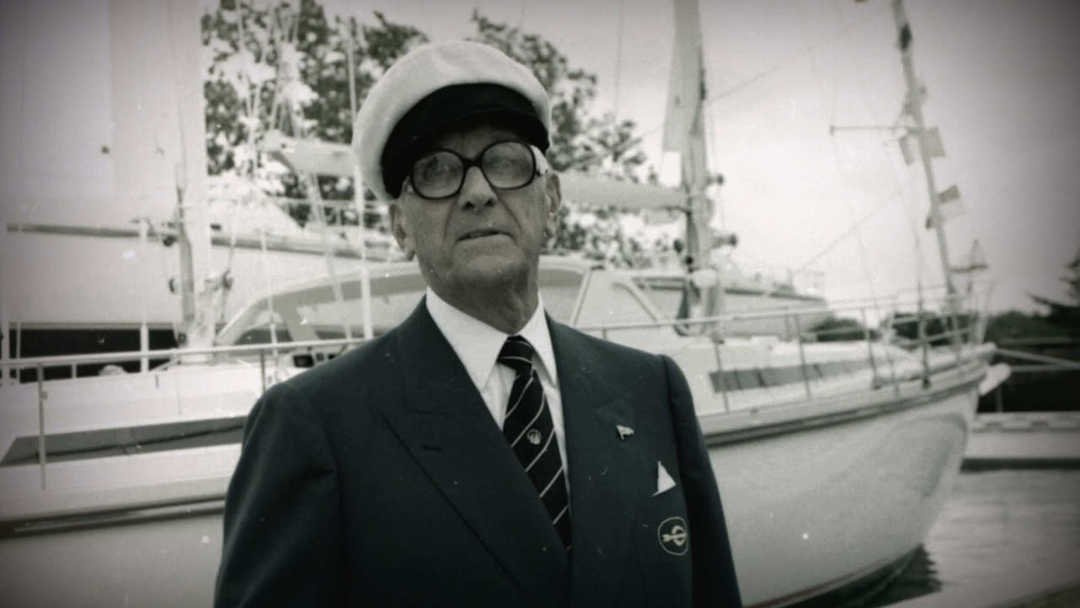
The Man Behind the Boat
Every Amel carries a bit of her founder in her bones. Henri Amel, born Toncet, took the name Amel after serving with the French resistance in the Second World War. During the war he studied the polyester-impregnated pontoons used for floating bridges, and it gave him an idea: build boats the same way. He came out of the war wounded in one eye. For several years afterward, he was almost completely blind.
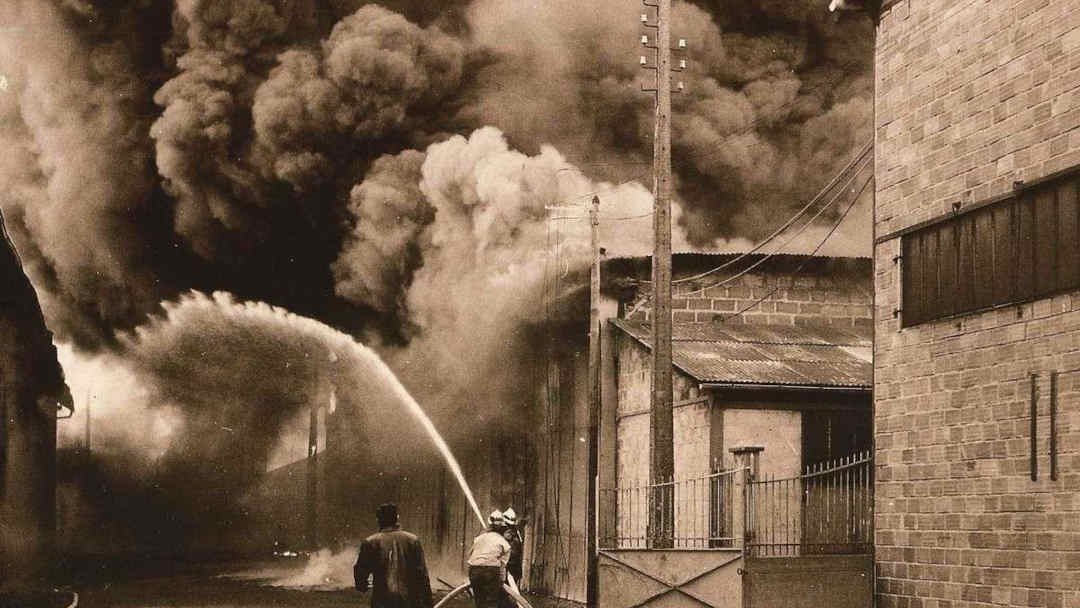
By the time he founded the Amel yard properly, he'd already spent years building boats out of small workshops in Paris and Lyon. In 1964, at around fifty years old, he took over the ARPIN polyester works in La Rochelle's Ville-en-Bois district, with a workforce of just over forty. Four years later, on 3 February 1968, the yard burned to the ground. Amel didn't fold. He rebuilt from scratch at Périgny, on the edge of town. The new premises opened in January 1969, and every Amel yacht since, Nalu included, has been built there.
Henri Amel spent the rest of his life chasing one goal: designing and building yachts robust enough for real ocean passages, comfortable enough for a couple to actually enjoy living aboard, and simple enough for two people to handle in any weather. He didn't call his boats cruising boats. He called them "integrated cruising systems". And he meant it literally. He designed hull, rig, deck gear and interior together, as one machine, instead of bolting them together from a catalogue.
From Maramu to Super Maramu
The Maramu arrived in 1978, at 13.80 metres. It was Amel's first real long-distance success, and some 260 of them found owners worldwide.
The Maramu wasn't the only boat on the drawing board, though. Through the late 1970s and into the 1980s, Amel built a whole family alongside it: the smaller Sharki in 1979, the 16-metre Mango that same year, and the compact Fango in 1985. Every one of them got the same running upgrades as the years went by. An electric headsail furler arrived in 1983. Electric in-mast furling for the mainsail came in 1984. Purpose-built whisker poles followed in 1985, then a retractable electric bow thruster in 1986. By the late 1980s, one person could bring any of these boats into a crowded harbour, pick up a mooring in a blow, and handle the sail plan alone. Those manoeuvres used to demand a full crew on a boat this size.
Amel still wanted more than any of these hulls could give him. He wanted a generator you couldn't hear running. Air conditioning and electric heating. A separate freezer on top of the fridge. An electric watermaker, a washing machine, three real cabins, and a galley big enough to cook in properly underway. So in 1988, he and Jacques Carteau retired the Mango and replaced it with an entirely new 16-metre design: the Super Maramu. Amel's own brochure called it a boat "inspired by the Maramu, but not an extrapolation of it." It carried the Maramu's name and spirit forward, matched the Mango's size, and underneath the skin ran a central fin keel flanked by two lateral "wings," built to carry Amel's own propulsion system, the C-drive.
An Integrated Cruising System
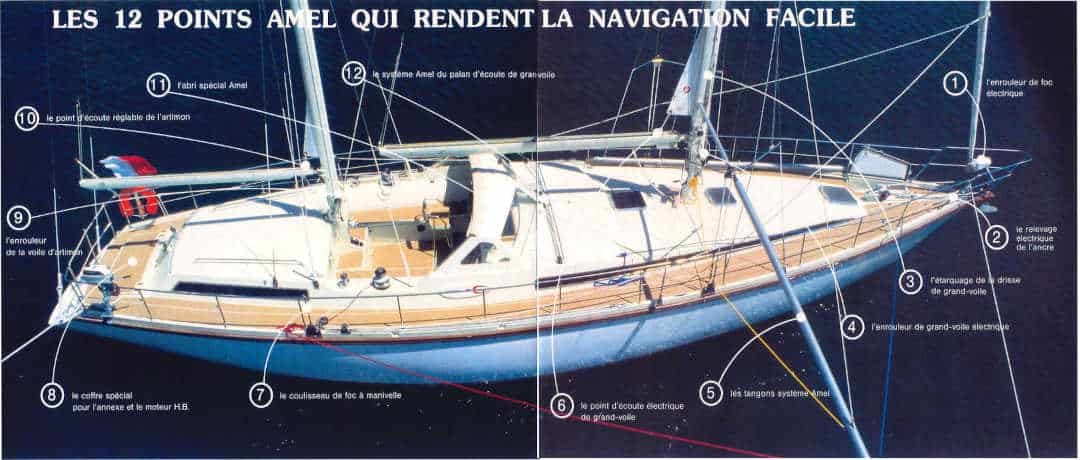
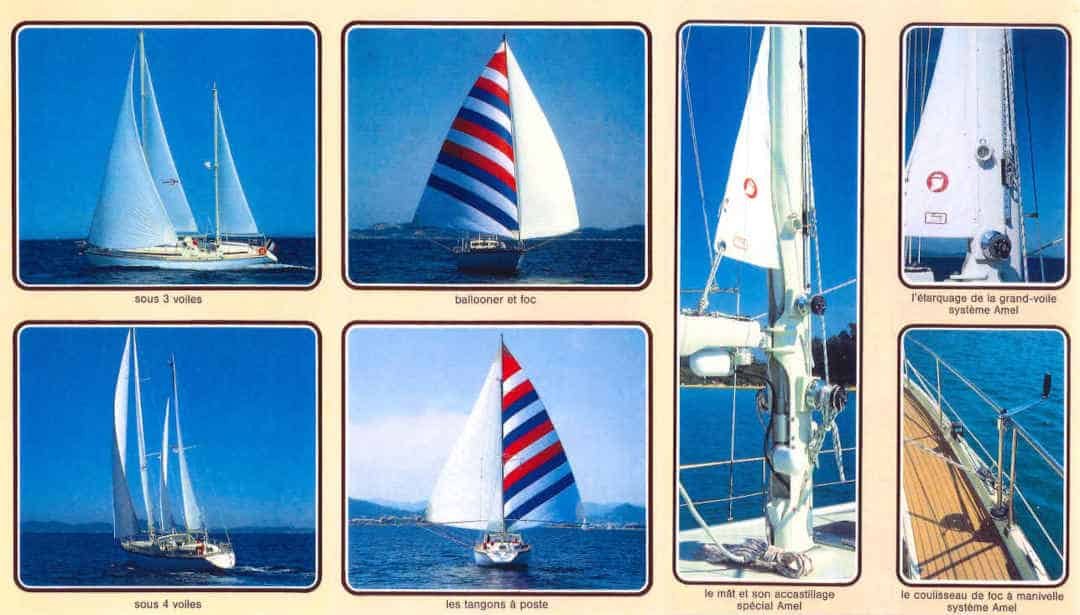
Everything on deck exists to remove effort, not to add gadgets for their own sake. Amel's own brochure lists twelve points, and they all point the same direction. Electric furling for the genoa and mainsail, though the mizzen stays manual. An electric anchor windlass you can run from the cockpit. Electric winches. A crank-operated genoa track car. And whisker poles, built around Amel's twin-headsail downwind rig.
Amel built the whole downwind plan around that twin-pole system instead of a spinnaker. For years, the yard actively steered owners away from buying one. The genoa and a lightweight "ballooner" headsail fly side by side instead, poled out wing-and-wing on their own tracks but sharing one furler. That means both sails roll away together in a single motion from the cockpit if the wind builds.
Built Like No Other
Under the gelcoat, the Super Maramu's hull is a solid, hand-laid laminate. There's no core at all, just polyester resin over a special flat-woven biaxial glass cloth.
Amel has used this cloth in every hull since 1967. It bonds to itself with almost no voids, so the yard skips the extra layers of mat a normal woven-roving layup needs. The cloth runs in one continuous, unspliced length from gunwale, down through the keel centreline, and back up to the opposite gunwale. A second set of layers runs bow to stern. That leaves effectively no seam anywhere in the shell. Amel also applies a proprietary barrier coating directly under the gelcoat. It's reportedly kept osmotic blistering off every Super Maramu hull built.
The deck is balsa-cored for stiffness and insulation. Wherever hardware is mounted, though, it switches to solid laminate, with stainless backing plates buried in the glass instead of bolts running straight through a cored deck.
Here's the part that really sets Amel apart. Most builders mould the hull and deck separately, then join them afterward along the sheerline with adhesive, mechanical fasteners, or both; the classic "hull-to-deck joint."
Amel does it differently. The yard fits the deck while the hull still sits in its own mould, then hand-laminates the two together, from outside and inside, with several layers of cloth. Hull and deck cure into one continuous fibreglass structure instead of two parts joined after the fact. There's no separate joint to fail, because there's no joint at all in the traditional sense.
The same goes for the boat's four full-height watertight bulkheads. The yard bonds them in as structural parts of the hull while it's still in the mould. Two of those bulkheads carry watertight doors, so in a genuine emergency, you can seal off sections of the boat from each other.
The C-Drive
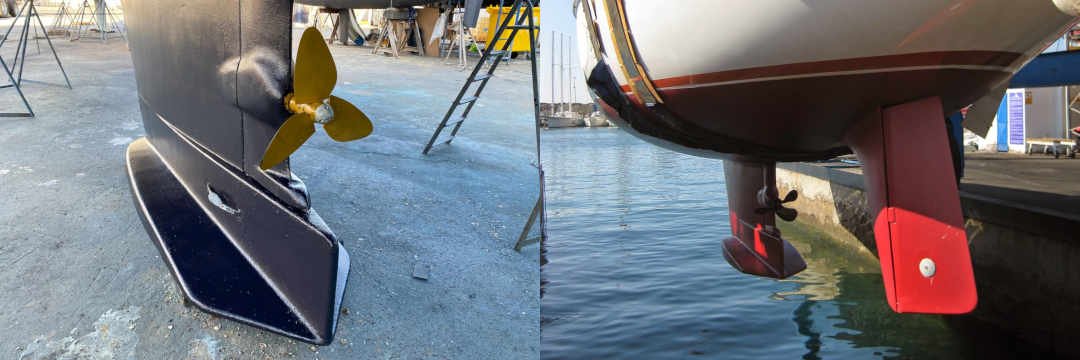
Most sailboats drive their propeller the simple way. A straight shaft runs aft from the gearbox through a stern tube, and out through the hull just ahead of the rudder. Amel does it differently.
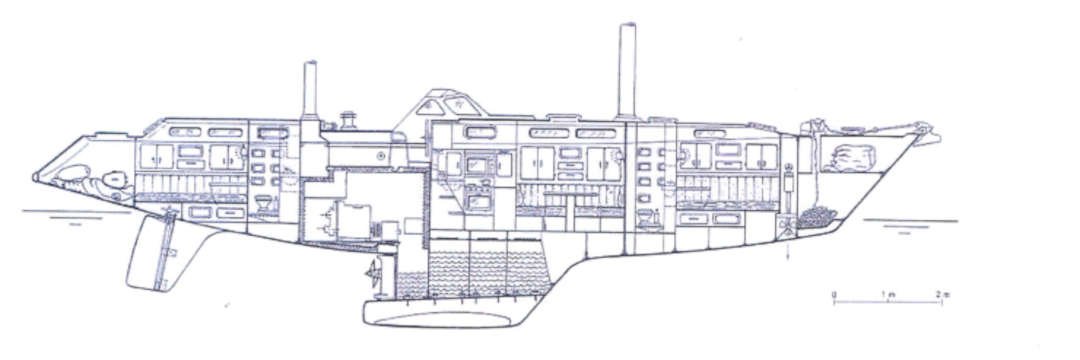
The engine sits backwards in a large engine room under the cockpit sole. From there, the drive doesn't run straight aft. It passes through a pair of right-angle joints and down into a sealed, purpose-built leg bolted onto the trailing edge of the keel itself.
The pay-off is real. Because the engine isn't bolted rigidly to a straight shaftline, it can sit on soft rubber mounts. That's a big part of why a Super Maramu runs so quiet under power.
There's a trade-off too. The C-drive is a sealed, proprietary unit, not an off-the-shelf shaft and cutless bearing. It needs regular maintenance and replacing it is a very expensive job.
Comfort, Luxury & Solidity
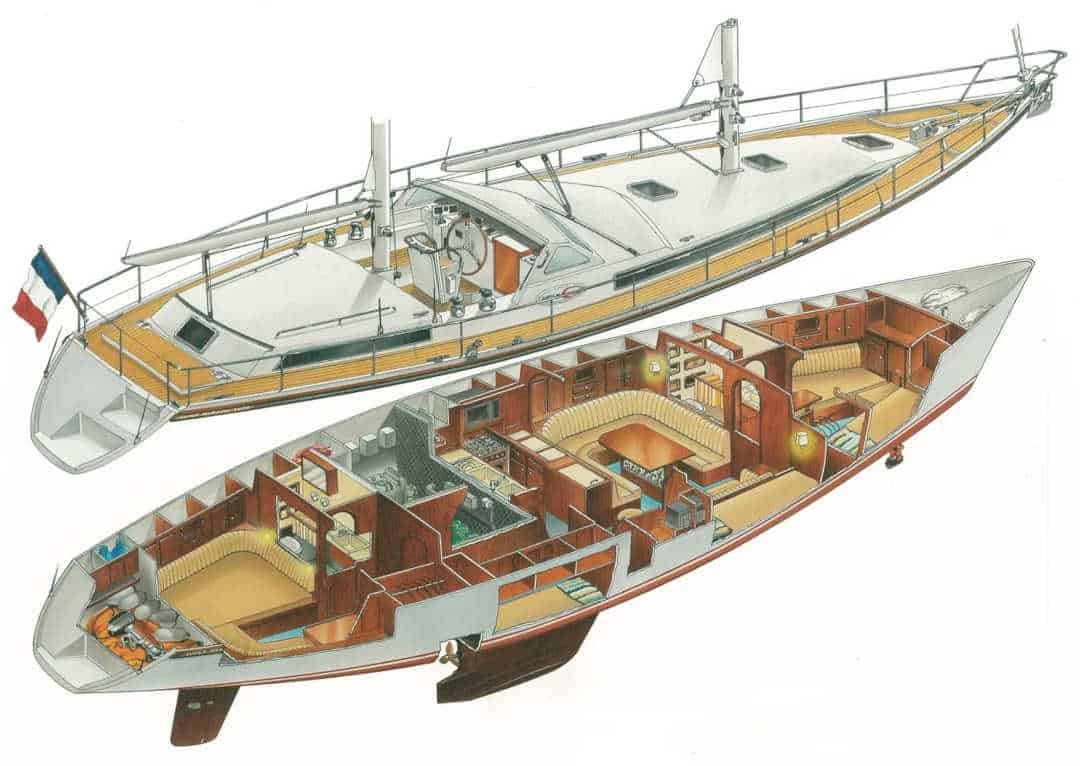
Below deck, Amel's own brochure sums it up as "confort, luxe, solidité". It's not just marketing copy. A generous saloon and galley, a forward cabin, and a choice of aft-cabin layouts (one with a fixed double, one with two singles that convert) give her genuine three-cabin, liveaboard proportions inside a 16-metre hull.
She came standard with a retractable bowthruster, diesel generator, a separate freezer under the saloon settee (and of course a galley fridge), air conditioning, a watermaker, a washing machine ... and even a dishwasher, although Nalu's previous Dutch owner removed the dishwasher. We're perfectly fine with that, even if Henri would probably disagree. She was built for warmer climates, so her original heating amounted to a few small electric heaters rather than a proper system. We've since added a Webasto system so we can heat every cabin properly and keep her dry and warm.
Why We Chose Her
None of this makes the Super Maramu fast. Amel never pretended otherwise. She's a cruiser, not a racer, built to eat up miles safely and comfortably rather than chase passage records. That's exactly the point.
We didn't choose Nalu because she's the newest, the fastest, or the prettiest boat in the anchorage. We chose her because she is built like a tank. Strong, and easy to sail with just two people. She'll take you wherever you want to go at a respectable speed, munching away the miles while you stay comfortable, both inside and out in her roomy, deep cockpit.
Since you've made it all the way down here, you may be interested in a look at the original Amel Super Maramu brochure. Click right here to save it to your computer or device (.pdf, 14 MB (!)).
Nalu fact sheet
| Name | Nalu |
| Home Port | Steenbergen, NL |
| Call Sign | PD6914 |
| MMSI | 244859639 |
| Builder | Chantiers Amel |
| Type / Model | Super Maramu |
| Year | 1994 |
| Hull / Build No. | 0030017SM120 |
| Material | GRP/Polyester |
| Hull Type | Wing Keel |
| Rigging Type | Masthead Ketch |
| LOA | 52.49 ft / 16.00 m |
| LWL | 41.34 ft / 12.60 m |
| Beam | 15.09 ft / 4.60 m |
| Displacement | 35,274.00 lb / 16,000 kg |
| Ballast | 12,125.00 lb / 5,500 kg |
| Draft | 6.73 ft / 2.05 m |
| Comfort Ratio | 32.86 |
| Hull Speed | 8.5 kts |
| Air Draft | 68.89 ft / 21 m |
| Engine | Volvo TMD22A (78HP) |
| Diesel Tank | 158 Gal. / 600 L |
| Water Tank | 264 Gal. / 1000 L |